
The University of Colorado’s athletic department is projecting that it will run a $27 million deficit during the current fiscal year ending in June 2026, in addition to needing $11.9 million in institutional support from the university and $2.2 million from student fees, according to budget figures obtained by USA TODAY Sports.
Those numbers are not final. The athletic department is hoping to bring that deficit down by the end of June with revenue from donations, sponsorships and concerts at Folsom Field. But it has never reported a deficit that big before, which could potentially leave the athletic department in need of more than $41 million in subsidies from the university, including the institutional support and student fees.
It also comes at a critical time:
Athletic director Rick George announced recently he’s stepping down at the end of the fiscal year in June.
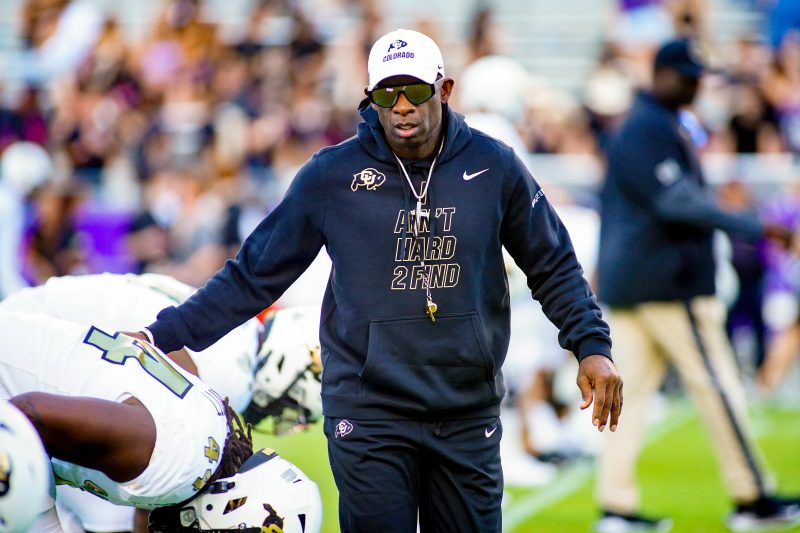
Colorado nearly doubled the pay of football coach Deion Sanders in March, giving him a new five-year contract worth more than $10 million annually. His team just finished 3-9 in 2025 as attendance started to wane after selling out his first season in 2023.
Like other major college sports programs, Colorado is committed to providing players with up to $20.5 million in annual benefits and direct payments under terms of the NCAA-House legal settlement. That cost is new this year, with the $20.5 million cap going up by 4% next year and the year after.
The latter two costs are the biggest reasons for the projected deficit — the $20.5 million for players and the $10 million per year for Sanders. Colorado previously told USA TODAY Sports in September it was “to be determined” how it would come up with the money to pay for those two big new costs.
Colorado says it won’t cut sports
The projected answer now is that it will run a deficit with the university as the potential backstop for funding. Asked who would be paying for these expenses if not the university, spokesman Steve Hurlbert said, “The mechanics of that are still to be determined.”
The school said it will “not cut sports nor cut any resources for student-athletes” but will look to cut expenses.
Hurlbert also stressed tuition money and state funds will not be used to address the deficit.
However, some observers who are familiar with Colorado’s budget expressed skepticism about that claim because money is fungible. The money the university provides to athletics also is discretionary.
“This notion that they’re spending resources that otherwise couldn’t be spent on putting more kids through college or funding cancer research is just absurd,” said Jack Kroll, a former member of the university’s Board of Regents. “There’s no truth to that whatsoever.”
‘The university will have to fill the gap’
The projected revenue for fiscal year 2026 is $136.7 million with $163.7 million in expenses. The biggest expense is football at $60.4 million. The department is still finalizing its numbers for fiscal year 2025, which ended in June 2025, but said it expects a “balanced” budget of $141 million in revenues and expenses for that year, including $24 million in institutional support revenue from the Boulder campus and the university’s president’s office.
Colorado isn’t the only school facing these challenges. In fiscal 2024, at least 33 athletic departments received at least $30 million in university support, including Colorado ($31.9 million), Houston ($38.4 million), Arizona State ($51.7 million) and South Florida ($63.7 million), according to public records collected by USA TODAY Sports in conjunction with the Knight-Newhouse College Athletics Database at Syracuse University.
The House settlement added a potential new $20.5 million expense to their bills starting July 1, 2025.
At Colorado, last year the university projected a small but growing budget deficit for the campus starting in fiscal 2027. It even told faculty and staff to move forward by “being comfortable with being uncomfortable.” This has led to concerns about how football is paying for its big new expenses.
“With a lame-duck athletic director, a dismal football season, who-knows-what to happen with the (transfer) portal, donor fatigue, the distancing of football leadership from football alums — the prospects for making much of a dent in that deficit seem very slim,” said Roger Pielke, an emeritus professor at Colorado who previously taught sports governance in the CU athletics department. “That would mean that the university will have to fill the gap.”
Follow reporter Brent Schrotenboer @Schrotenboer. Email: bschrotenb@usatoday.com